After spending the last few years wearing out my eyes with either policy papers, correspondence or uni books I have finally had the chance to read a work of fiction again, purely for entertainment and enjoyment purposes, and without the need to write a review of its contents for any official purposes. But, old habits are hard to break and so I’m about to write about this book anyway, but this time purely for entertainment and enjoyment purposes.

Swedish writer Stieg Larsson was not fortunate enough to have witnessed the success of his Millennium trilogy, having passed away suddenly in November 2004.  The first of the trilogy, later given the English title of The Girl with the Dragon Tattoo was published in Sweden in 2005 but did not make an English translation until 2008. Now, in 2009 millions of copies of all three novels have been sold worldwide, and there are rumours of a Hollywood production, while a Swedish language film has already been released in the Nordic countries earlier this year.

From the original Swedish the title of the first book translates to Men Who Hate Women rather than The Girl with the Dragon Tattoo, but while the Swedish title makes more sense – each part of the story opens with a statistic on violent acts undertaken by men against women -  I can honestly say that it would have been unlikely for me to have picked up a novel with any such title.

The girl with the dragon tattoo is Lisbeth Salander, a socially retarded victim of society and serially abused young woman with a penchant for all things hacker and dark. Although initially required to investigate him, she is teamed with journalist Mikael Blomkvist, who I can’t help but suspect is at least in some way based on Larsson himself, who has been hired by billionaire ex-industrial tycoon Henrik Vanger under the pretence of writing the Vanger family biography but who is really commissioned to solve the forty-year-old cold case of the disappearance, and potential murder, of Vanger’s great-niece, Harret. Larsson utilises the locked room mystery as the vehicle for his story, although his locked room is an island with no way in and no way out on the day the alleged crime was committed. Most of the clues are right under the noses of Vander and his family, it just takes a new set of eyes to truly see what the  forty year old evidence presents.

The story is compelling as Larsson details each character in isolation for a time before revealing the connections between them and bringing them together to solve the mystery of Harriet’s disappearance. The development of his characters and the detailing of their lives is believable and engaging. His interruption of one character’s story with the parallel undertakings of another is a little disruptive but none the less leads you to read on in the hopes of getting back to the other character’s story. This tool is useful in sending the reader back and forth between the characters and in not allowing the story to get too bogged down in following a linear storyline. Larsson’s characters are written with a depth and recognition that leads me to believe they are based, if not entirely than in part, on characters within his own life. As I said before, I have little doubt that the author’s experiences in the journalistic arena have influenced his writing of Blomkvist, similarly the other magazine staff. So too, Larsson’s real life experiences with fascism, right-wing extremism and the anti-violence movement are knowingly reflected elsewhere within the novel.

Be warned though, there are a number of truly disturbing episodes of sexual violence detailed within this book, however, they are handled in a relatively skillful manner. Although Larsson uses detailed description to set the scene elsewhere in his story his coverage of these particular incidents is not excessively graphic, providing enough emotional investment to empathise with characters involved, but not so much that it is dwelled upon.

Book two in the series is The Girl Who Played With Fire…I’ll get onto that shortly.

It’s raining out…I think Ireland is finally showing me it’s true colours, and those colours truly are shades of grey. I’m stuck indoors with a belly ache and work to do for my impending interviews, one writing task and one presentation, which basically means I’m open to online procrastination. In order to source some creativity I’ve been perusing my brother Josh’s drawings. He’s very good, in my humble opinion. I hate to be a doting sister but his creative ability has been an inspiration to me, at least for today. =)

Yesterday I was presented with the opportunity to yet again play into the role of the tourist that I am! My very good friend Anthea came to visit as part of her whirlwind trip to Europe. As an academic she had a round trip to the UK funded by her host university to present a paper in relation to her current research work. Given that it’s really not worth flying all the way to the UK from Australia without also throwing in a little bit of Europe she decided to pay us a visit as a side trip from a Belfast family reunion.

Of course every good girlie catch up begins with either some food or some drinks. In our case we opted for a lovely lunch at Juice on South Great Georges Street, which bills itself as Dublin’s only sit down vegetarian restaurant. For someone who has issues with nuts Juice is great, as the menus make it clear which of it’s dishes contain nuts, although, of course, everything these days is potentially contaminated with traces. As with the rest of Dublin, in order to mitigate any drop in business Juice has implemented a discounted lunch menu, and for around 12 Euro you can get three courses of good, healthy and colourful food (well needed in a city where many of the other lunchtime options are brown foods). I chose the bruschetta, which came with a small side salad, and the spicy corn fritters with guacamole and another small side salad before a nice cup of Earl Grey tea as there was no way I could fit in another course. Anthea, for dessert chose the apple and rhubarb crumble. I mention the crumble because it was made from grains and seeds rather than biscuit, which made for a healthy and very tasty alternative well worth trying at home.

Now, the reason I’m telling you about the food is because the content of girlie discussions is full of gossip and innuendo that needs not to be published on an internet blog site. In any case, it was good to spend time with someone who knows at least some of the people, places, news and goss from home. Oh, and to hear a welcome Aussie accent in full conversation and not just from the girl behind the counter taking my coffee money. It seems my own accent has gone walkabout since my arrival in Ireland. I’m rolling my Rs and am getting better at the full Dub vernacular the longer I spend here…as a put on of course, although some of it seems to be sticking!

Mr Emmet took us on a tour of Dublin, as my own attempt at playing guide during the walk from Connolly Station to the restaurant had exhausted my knowledge of the City. I was able to point out that the large phallic structure in the middle of O’Connell Street, but really you can’t miss that! It is, of course, the Spire of Dublin, which was built to replace Nelson’s Pillar, which had previously stood in its place but had been bombed by the IRA in 1966. Thanks to Emmet for this information. We wandered along O’Connell Street and then down towards Trinity College, which was of the most interest to our guest – being of British decent and an academic this comes as no surprise. Trinity was founded in 1592 (we were trying to figure out the date yesterday while standing in the cobblestone courtyard) and opened by Queen Elizabeth I. The college was originally for Protestant students only, however these days Catholics, and presumably students of all other religious variants are permitted to attend. Although we didn’t go in this time, I’d advise visitors to take a look at The Long Room, which is literally a long and very large room lined with some 200,000 of the University’s oldest books. The library at Trinity is a copyright library for the UK and Ireland, which means it contains a copy of every title under copyright in those countries…which makes for a lot of books! The Long Room is very impressive, not only for bookworms. The Book of Kells (or Book of Kelly according to one very annoying American tourist I overheard), is also on display in Trinity. The text written in 800 AD is illustrated, or illuminated, with intricate hand drawn images and is well worth a look. It costs about 9 Euro for the privilege of seeing both the Book of Kells and the Long Room. Go early, as there is often a line.

Onward from Trinity and beyond statue of Molly Malone with her cockles and some bloke dressed up in a leprechaun outfit on Grafton Street, we wandered towards St Stephen’s Green, which was this time devoid of ladies in their bikinis and lads in their shorts. The weather was a wee bit nippy but even so locals were making the most of what still passed for outdoor weather luncheoning or just hanging out in the park. The park is an oasis in the middle of the City, with a similarly calming effect as Hyde Parks in London or Sydney. The sounds of bustling cars, buses and trams seems to disappear inside the hedged walls of the Green. The park has a number tributes to local heroes within it. Yeats is there, as is Joyce, but it was Robert Emmet who we managed to walk by. Emmet is my Emmet’s namesake and was a nationalist leader who was, eventually and unfortunately, found guilty of high treason and hanged, drawn and quartered.

The afternoon eventually led us to St James’ Gate Brewery and the Guinness Storehouse. For 15 Euro you can walk through several floors exhibiting information and paraphernalia on the Guinness empire including the stout brewing process, log books of orders signed by Arthur Guinness, and examples of the various advertising campaigns Guinness has presented. I must admit that the Storehouse is a little less exciting than when I first went some years ago (and it seems to be undergoing some renovation – but that’s not currently advertised when you’re paying for your ticket), the 15 Euro ticket also gets you a pint of Guinness in the Gravity bar, which just happens to have the most spectacular view of Dublin. The view is panoramic and quite wonderful to observe over a nice cold pint…not that I would know, as I opted for a Coke knowing full well I would not be able to handle a whole pint of stout! The only downside is the lack of seating…remember, this is a tourist attraction and they generally arrive by the bus load…and the children…pondering why people bring their children to an alcohol related attraction is just confusing.

A short bus ride back into the centre and it was time for dinner, with Temple Bar a fitting location. Now, Temple Bar is allegedly the ‘cultural’ centre of Dublin, however in truth it is a collection of bars with some intermittent galleries, buskers and the IFI (Irish Film Institute). It’s just as commercial as anywhere else in Dublin, but with an atmosphere I can only reckon to, and I’m being generous here, Newtown in Sydney.

As we browsed the outdoor menus we were approached on the street by a woman spruiking her restaurant, La Caverna, and decided to give it a go as they’d extended the early bird menu to 10pm. We were seated in what felt like an escape tunnel but was more likely once-upon-a-time someones wine cellar and were served by a lovely young Asian fellow sporting Colin Farrell’s accent. The lamb shanks matched with mash potato and red wine reduction was melt in your mouth. Unfortunately, the apple pie had a strangely textured pastry but the apples were lovely and so too the accompanying vanilla ice cream. But with the bill coming to around 20 Euro each I really can’t complain.

Dinner conversation took a turn for the worse (my tongue is firmly in my cheek) when Emmet and Anthea began their rants on Twilight. Emmet read Twilight, the first of the series, while we were in Wollongong, and although I have not taken the time to read the whole of the series myself I was able to share in Emmet’s pain and struggle as he read aloud a number of passages either made up of too many adjectives describing a car or not enough words making up a conversation between the two main characters. I would be interested to know how many times the word ‘glaring’ ,or some variation thereof, is used in this book. Similarly, I’d like to know why Meyers inter-textual references are so blatant and whether she actually read and understood Romeo and Juliet or Pride and Prejudice, cause I think the versions I read were completely different. And, I wonder what happened to the life Bella had built for herself before she met Edward… Emmet and I bought Anthea a copy of Twilight for her birthday last year. It was an intentional gift with loaded repercussions as Anthea’s field of specialty is women’s studies. From what I can gather she may be one of the first to have an article published on the topic of the Twilight series, and she is not likely to be too kind. I can empathise with her thoughts, as I have found the character of Bella, from what I can gather, to be basically non-existent outside of her relationship with Edward. Why is she so reliant on him to provide her with context, and why is it that she can’t even walk in her own shoes (Bella has a penchant for tripping over) and continually needs rescuing by big strong Edward? Meyer appears to skirt around the idea of sex, although it is obvious that teenage sex is bad, it’s Bella’s fault for being too enticing while Edward should be congratulated on his ability to control his natural urges. Even when the two protagonists do have sex, within the sanctity of marriage of course, Bella is left covered with bruises, Edward wants her to abort the monstrosity of a child and the eventual birthing process is enough to frighten any teenage thinking of hanging sex into purchasing a chastity belt. Don’t even get me started on the whole vegetarian vampires who sparkle issue! In any case, the enthusiastic conversation encompassed Twilight, Michael Jackson, who in case you’ve been living under a rock passed away last week, the idea of celebrity and celebrity culture, and a number of other very serious but also very light topics.

We bid Anthea farewell on return to her hotel in the middle of town. Hopefully we had put into her head some ideas for sights to see and things to do for her second day in Dublin before returning over the border back into Northern Ireland.

I never thought I’d be part of one of those couples who does outdoor-sy things on the weekends, like spending a day riding bikes around islands off the west coast of Ireland. Somehow, that’s exactly what I found myself doing, and loving doing, on Friday, although granted not technically a weekend day, when Emmet and I took a trip to Inis Mor, the largest of the Aran Islands just off the coast of Galway.

The Aran Islands are apparently made up of kast limestone, and appears to have been cultivated for the growing of livestock, in particular sheep and cattle. The wool from the sheep is used to make traditional Aran sweaters, which are possibly the most recognisable Irish garb. Apparently different Aran clans have their own sweater patterns. I bought into the whole tourist thing and purchased my own Aran sweater from the Aran Sweater Market on the island, however, there are no Fargher or O’Cuana sweater patterns to my knowledge.

The islands do remain inhabited, but it’s a bit strange to cycle past these stone houses dotted and sometimes clustered around the island, otherwise wholly removed from the rest of the country. The population of Inis Mor, as with the other two Aran Islands, Inis Meain and Inis Oirr, is known for its preservation of the Irish language, the lyrical sound of which we could hear being spoken between the locals. Emmet speaks Irish and made some attempts to converse with the service providers we were dealing with, however, for many it was unexpected after hearing my much more broadly foreign accent.

Starting from the beginning of the day, to reach Inis Mor we had to travel for about  an hour from Galway town centre , leaving at around 9.15am, in order to meet the ferry across to the island, getting us to the island at around 11.15am. We travelled with Aran Island Ferries and paid about 32 Euro each for a return journey including both the bus and ferry. The ferry crossing takes another 40 minutes or so but is pleasant enough – we dozed in both directions. Upon arrival you’re greeted with a number of options to make your way around the island. Bikes are popular and are advertised for hire at a rate of 10 Euro per bike per day, although they may spring a deal on you and offer a five Euro discount. You will still have to pay double at the beginning of the day, with the deposit returned to you when you hand in your bike at the end of your travels. There are a couple of outlets from which you can get your bikes, all conveniently located around the dock. Alternatively, there are minivan tours, none of which look particularly official but all of which appear to be run by local townsfolk. There’s also a horse and cart option with a local guide, which will take you from one end of the island to the other. The last, and most economical option, at least in terms of Euros spent, is to walk.

It has been a very, very long time since either Emmet or myself mounted any sort of bike. Emmet has had a few spills over the handlebars while I had never thought myself particularly well balanced on two narrow wheels. However, we chose the cycling option, one because it seemed like the thing to do, and two, because we thought we could do with the exercise on this wonderfully sunny summers day. Looking decidedly like the city tourists we were I had my hand bag, which I promptly shoved under the rusted clip overhanging the back wheel, the shoulder strap wrapped around my seat, and off we went. Emmet of course chose the dud of the bunch of bikes with a seat that would not stay up. Never mind. In any case we were going to look like gooses as we were the only ones on the island wearing helmets. Safety first, as always!

The road is relatively easy to negotiate, with all passers by giving you a nod and a wave as you carry on down the road. A few of the ‘hills’, and I use the term loosely, we had to walk the bikes up as the gears were not quite as accurate as they should have been, and my netball knees weren’t keen on negotiating with the pedals. Going down the hills was a breeze, literally.

We could not have asked for a better day with the sun shining, blue skies and a light wind to take the edge off as we got our heart rates pumping. The views from the road were absolutely glorious, and as already mentioned, scattered with stone houses and random livestock. The land is littered with rocks and stones although surprisingly there is still room for greenery. In many ways, Inis Mor is picture postcard olden day Ireland.

One of the main features of Inis Mor, and to where the main road leads, is Dun Aonghasa (kind of pronounced Doon Angus, for the laypeople), a stone fort erected some time during the Iron Age. Although it may have been constructed as a circular fort, of which there are a few on the Aran Islands, Dun Aonghasa is now situated on the edge of a very sheer cliff. In any case the site is both impressive and oppressive. It is truly amazing to be literally standing on the edge of a cliff looking out onto the ocean. If you’re a little bit mad, or Emmet, you might like to crawl up to the edge of the clifftop and look directly below. The OH&S issues associated with this tourist destination were abundant, as there is no barrier or fencing between hundreds of tourists and potential death. There is, of course, a barrier between the designated path and the surrounding grazing area, because we wouldn’t want any tourists having incidents with neighbouring livestock now. Of course the site is now a responsibility of the Office of Public Works and it costs 3 Euro for the pleasure of walking to the clifftop. It is, however, totally worth it.
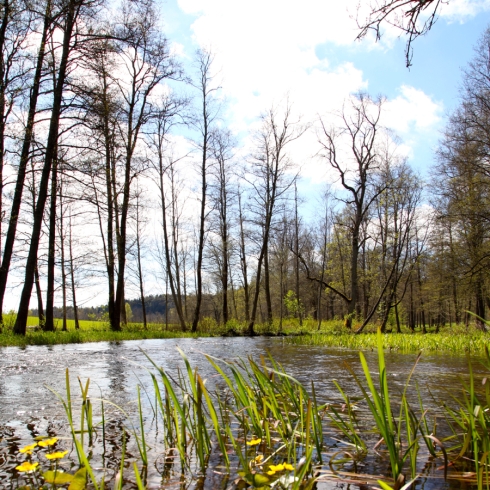
At the top of Dun Aonghasa was the only time we experienced any hint of a change in the weather. As soon as we were back at the bottom it was clear skies and more cycling. With some concern we had approached the site leading up to the fort, conscious of what we would do with our bikes, but there is a small bike park that seems to work on the honour system. We figured that it’s a small island and no matter what the bike rental places would eventually get their bikes back, somehow, anyway. Not far from the fort is a small but pristine beach. In Ireland they have the blue flag system whereby beaches are awarded blue flags to display on their shores if they meet a set criteria relating to water quality, safety and services, and environmental management issues. Apparently the scheme runs in a number of places around the world, but the first I’ve heard of it is here in Ireland. This little beach on Inis Mor has a blue flag. It also has white sand and crystal clear water, however cold. It’s not a wavy or surfing beach but the closest thing I’ve actually seen to A BEACH since I arrived here.
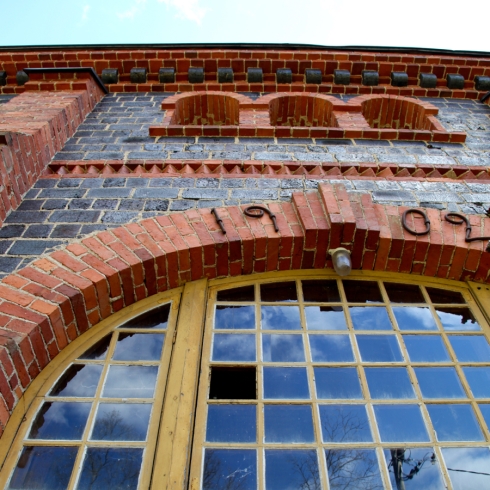
The ride back to the port was the most enjoyable. The wind in our hair and a niggling ache in our bottoms as we peddled our way back. Granted, the way back was less hilly than the opposite direction so much of the return journey was legs resting in peddles and exclamations of ‘WEEEeeeeeEEEEEeeeEEEeeeeeEEeee’ as we travelled down hill. By the time we had returned to the bike shed our legs had had just about enough of us and our tummies were telling us it was time for some lunch. By this time it was around 2.15pm, and while we had passed a couple of small cafes along the way we decided that for us unfit tourist bikers it was probably best not to eat and ride. We returned our bikes, got our refund and promptly spent it on a tasty lunch at O’Malley’s at Bayview. A plate of fresh fish and chips, ham, cheese and tomato panini, a Guinness, cranberry juice, a homemade apple crumble for two, a pot of tea, and an Irish coffee later and we were ready to get back on the ferry and head back to our bed in Galway. But of course, not before picking up a sweater, which, I’ve been told, will come in mighty handy in the Irish winter, although right now I can’t imaging winter being all that bad.
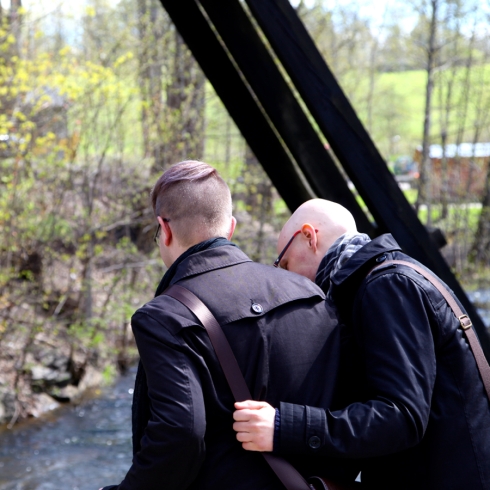
As an aside, we did receive some great news while sitting outside the fort at Dun Aonghasa – Emmet has been redeployed and will be starting work with Social Welfare in a couple of weeks time.

Below is Emmet’s review of the dreadful Year One, which we saw the other day. Don’t waste your time or your money…you have been warned. Emmet’s blog is Somnopolis.net.

Oh dear, oh dear. Harold Ramis, Michael Cera, Jack Black, Bill Hader, David Cross, Hank Azaria….they’re all capable of much more than this. (Vinnie Jones, not so much). Which makes it all the more baffling at how poor this film is. With an abundance of fecal jokes, Biblical parodies that are, even being kind, half-arsed and a plot that doesn’t so much wander as stall in the driveway.

Yet throughout I could not escape the impression that this was a 1980’s comedy that somehow only now made it out of the gate. In common with Spies Like Us it attempts to recapture the rambling humour of the Crosby and Hope ‘Road…’ movies. Also like Caddyshack it shares a childish toilet humour, Raimis being the common factor here. Yet this is the man who made Groundhog Day!

I believe this was a script slapped together in a stoned haze sometime after the National Lampoon days. Remaining on the back-burner all these years, maybe Raimis returned to it imagining it to contain some nugget of humour he could recapture. Maybe he just needed to fulfill a contractural obligation and flung this out. I don’t really know. There are frustrating hints of a clever idea here. Zed and Oh seem to live among a tribe of early Hunter/Gatherers, each poorly performing one of the functions respectively. As Oh points out, there are only two jobs. It turns out within the tribe’s territory lies the mythical Tree of Knowledge, from which Zed eats. This combining of evolutionary theory and Biblical myth is an interesting notion and following their expulsion, the pair encounter a host of figures from the Bible that coexist in a kind of condensed timeline – with Cain, Abel, Abraham, Isaac and the citizens of Sodom all lying in neighbouring territories.

Yet Raimis never does anything with this idea, merely churning out old Jewish jokes (’we’re not good at sports’). Cera and Black are stranded, with occasional improvs providing paltry relief from the tedium.

Comedy that goes bad can sometimes be the most disappointing, as its failure leaves little to enjoy. You can’t even spoof a dull spoof! (which is why I hate the Scary Movie franchise)

For anyone who is not aware, this is cuckoo spit. I walked out into the backyard the other morning to find foam all over the little lavender bush. I had no idea what it was so I decided to have a poke around. I probably shouldn’t have because as it turns out cuckoo spit is and excretion made by the larvae of the Froghopper, otherwise known as the Spittlebug. It appears that the spittle is a mechanism for protecting the young from predators.

So there ya go.

So even moving to Ireland can’t get me away from my cupcake baking fetish. Today I’ve baked a batch of chocolate cupcakes making slight alterations to my basic cupcake recipe, which I have outlined for you below. Using this recipe as a base you can pretty much add anything to liven them up – berries, chocolate bits, other fruit, whatever – you just have to pay attention to the way your oven heats. I’ve found that no two ovens are the same and so the timing for the cupcakes can vary up to about 5 minutes either side of 20 mins. It’s kind of written in a baking for dummies way, but that’s pretty much how I learned to make them.

Basic Vanilla Cupcakes

  • 1/2 cup caster sugar
  • 120g butter
  • 1 cup self raising flour
  • 1 tablespoon milk
  • 2 eggs
  • 1 teaspoon vanilla extract

First, preheat your oven to about 200 degrees celsius, if you know you have a hot oven, try 180 degrees. Line a muffin tray with patty pans – this recipe should make around 12 cupcakes. And, make sure your butter and eggs are at room temperature and don’t come straight from the fridge.

Place the butter and sugar in a bowl and cream until combined. I like to use a wooden spoon and some good old elbow grease but you can use the low setting on an electric mixer if you prefer.

When the butter and sugar have been creamed put in the eggs, milk, vanilla and SR flour. Stir carefully until the ingredients are combined, then switch the shoulder into top gear, or use a higher beater speed and mix the batter until it turns pale in colour. It should also be nicely fluffy.

It’s at this stage that I like to add any additional ingredients such as blueberries or chocolate chips. Stir these in gently, especially if you’re using a fruit that can be easily broken up, like raspberries.

When all ingredients are combined place about one heaped tablespoon worth of batter into each of the patties. Place the tray in the oven on the middle shelf and leave to bake for 20 mins. I always like to check in around the 15 min mark to make sure all is coming along well. Poke a couple of the cupcakes with a skewer, this will give you a good sense of how much longer the cupcakes will need: if the skewer comes out dry you’re probably done, if a little bit of batter comes out give them about 5 minutes more, if they’re quite wet in the middle maybe they need the full 25 mins in the oven.

When they’re done, take them out and give them a few minutes to cool in the tray before turning them out onto the cooling tray. When they’re cool you can add whatever topping you like – icing, frosting, sprinkles, cream…whatever takes your fancy.

For today’s batch I added about 1/4 cup of pure cocoa powder, which makes the batter a little drier and means an adjustment of the baking time to about 13-15 mins, again depending on the way your oven distributes its heat.

*********


These ones were made with grated apple folded in, which made the batter a little more wet meaning an extra 5 mins in the oven. They were a little more muffin like, but lovely none the less.

These ones were made with little marshmallows folded in…it didn’t quite work out, but the icing made them look pretty.

Not much to say, really, about Antwerp. Some photos for you instead, perhaps.

Just about any town you travel to will have a church or other religious establishment, theatre, concert hall, museums, galleries and statues of cultural and historical relevance to the local people, if not the country as a whole. Listed with UNESCO as a World Heritage Site, Bruge is no exception. The medieval town is steeped in history. There are some sixteen official museums in Bruges covering fine and contemporary arts, archaeological findings, and two historical hospital sites now functioning as museums.

In Bruge, it is an experience enough just wandering through the narrow cobblestone streets within the very dense and maze-like city proper admiring the medieval architecture while following the routes of the canals that are the arteries of the town. There are religious figures all around, watching over you from the corners of buildings. Churches too are omnipotently present as their spires tower over all other buildings. There is the Basilica of the Holy Blood, which is said to house a phial of cloth coated in the blood of Christ, which was retrieved from the Holy Land following the Second Crusade. The relic is displayed before and after mass on Fridays. Michaelangelo’s Madonna of Bruges, allegedly his last remaining in tact sculpture, is located at the Church of Our Lady, the tower of which is the tallest in the city making for a great directional marker for lost tourists. I can easily see how one might consider Bruges to be the earthly equivalent of purgatory, see In Bruges (or not, if you don’t like black comedy or graphic violence), what with all the holy faces looking down on you while you’re in what could potentially be a very slow although picturesque location. NB: the dog from the film is still sitting in the window overlooking the canal.

However, what we chose to see on our all to brief encounter with Bruges was a little different. For the less culturally advanced a visit to Bruges may mean a visit to the Frietmuseum, the world’s first museum dedicated entirely to fries. Fries, yes, fries. By which I mean those thinly sliced deep fried, salted, sauced, vinegar-ed or mayonnaise-ed fingers of potato that often accompany a burger, steak or fillet of fish. For anyone who wasn’t aware, fries are apparently Belgian in origin. According to the legend, the name ‘French fries’ comes from the American soldiers who during the First World War mistook their Belgian counterparts as French, hence, we have French fries. Either this, or they called them French fries because the official language of the Belgian army at the time was French. I’m not sold on either, but makes for a great museum display. There is significant preparation and work that occurs prior to fries actually landing on your plate, or as in Belgium, in a paper cone. The potatoes must be washed and dried, cut and rewashed, par boiled and packaged, and of course before any of this can occur they need to be planted, grown and harvested. Once you have ordered the fries they are deep fried in (hopefully) clean oil, ideally you oil should be changed after ten batches of fries have been through it. They should then be shaken and drained before being salted and served. Phew! The museum also goes through the history of potatoes, their different varieties, which are best for making French fries and how they got from South America to Europe in the first place. There is also a collection of Belgian popular culture references to french fries with displays of postcards, comic strips, collectibles and other curios. In any case, if you’re young at heart the museum will have you leaving with a smile n your face and some salt on your lips as you get a 40 cent discount on a cone of fries at the museum shop with your ticket. The museum is located at Vlamingstraat 33, 8000, Bruges. Entry costs around 6 Euro, although you can purchase a combination ticket for the Frietmuseum, Choco-Story (the chocolate museum) and/or Lumina Domestica (the lamp museum) for around 10 Euro for two museums, or 15 Euro for all three.

Now you really can’t have savoury if not followed by sweet. Our next stop was Choco-Story, Bruges’ own chocolate museum. Choco-Story is conveniently located just around the corner from the Frietmuseum and in the same building as Lumina Domestica, at Sint-Jansstraat 7b, Bruges. The museum’s exhibition is displayed across several floors of what was originally a wine tavern in about 1480, but that has changed hands and served numerous functions since this time. The exhibition covers the history of the use cacao by the Myans and Aztecs who believed it to be a gift from the gods, how the cocoa plant and the tradition of making its fruits into a drink travelled to Europe, information on the cocoa plant itself, and the extraction of the various elements of the plant and the combination of ingredients used to make various chocolate products. There is also information on the Belgian chocolate industry and the creations of pralines by Belgian chocolateirs. Interestingly, one display dispels the belief that chocolate makes you fat, but recommends that if you are fat you might consider slimming down before enjoying chocolate in moderation! At the end of the tour is a live demonstration of how Belgian chocolates are made, by hand, and of course a sample. However, for those of us with nut intollerences there was no trying today, for partners of those of us with nut intollerences there were two samples to be tasted and enjoyed.

All in all it was a bit of fun, and a lovely day trip from Brussels taking just over an hour to reach and costing around 26 Euro return for a 2nd class adult seat. If you are considering visiting Bruges you might find it useful to visit the Official Bruges City Website, which details the various sightseeing opportunities, festivals and events, recommends accommodation and provides general information on hospitality.

The great thing about Brussels is that it’s relatively close to all other towns and cities within Belgium, as well as those over the borders in the Netherlands, France, Germany and Luxembourg, all of which are serviced by regular rail, bus or tourist providers. This makes Brussels a fantastic base from which you can take a few day trips. On the Thalys Paris is around an hour and a half away, Amsterdam around two and a half hours. However, you need to book and fix your passage ahead of time or else a return ticket to Paris can cost you around 180 Euro for a comfort 2 seat, compared with 50 Euro return if you book over 30 days ahead of schedule.

An alternative, if you only have a day to spare for traveling outside of Brussels is to take a guided tour, which will provide you with the mode of transport, visits to some attractions you might have otherwise missed along the way to your destination, and a background of the country, cities and towns you’ll be visiting. With neither of us having been to Luxembourg, and with some scepticism about there actually being something worth doing there – it is tiny and really only good for banking – we decided that a guided tour might be the way to go. We booked the Luxembourg and Ardennes tour through City Discovery, basically because it let me choose to pay in Australian dollars, which contracts a local company to provide the tour. Our driver was Michael and our tour guide, Marc.

Before you do decide that a guided bus tour is for you there are a few things that might be worth considering. Most significantly, you are on a bus full of people you probably otherwise would have absolutely no interaction, by choice or otherwise. Generally speaking you don’t have to associate with them too much, but depending on the distance to your destination and the number of rest breaks you have en route, you may have to consider just how much you can take of the large American fellow in the adjacent seat going on about what happened during the Second World War and how much he has been affected by it even though he is obviously too young to have served any time. He’ll also yell at the guide up the front to find out which side Luxembourg’s only synagogue is on. It was on the right hand side, and to be honest not all that impressive in the scheme of synagogues worldwide. Then there are the obligatory two fat ladies, who, during the walking tour of the city, are audibly complaining through heavy pants, distracting from the interesting tidbits the guide has rote learned just for us. I truly think the sample of people you find on any tour is the same – there’s the elderly couple spending the kids and grandkids inheritance, the young couples who keep to themselves and general wander around holding hands and taking photographs of themselves, there’s the two fat ladies whose husbands are long gone or never were, and the middle aged parents with the grown up kids on that last family holiday. Can you guess which stereotype we were?

Our tour took us out of Brussels and through Namur province with our first stop in the cliff side town of Dinant. The town of Dinant is steeped in history with its territory much sought after due to its apparently strategic location. It was the site of much atrocity particularly during the First World War, but is also the home of the creator of the saxophone, Adolphe Sax. Two options were given to us during our short visit to Dinant, first, a visit to the Citadel perched high on the clifftop overlooking the township, or second, a visit to the House of Sax. Okay, I don’t think it was actually called that, but apparently it literally is the house in which Adolphe grew up.

Emmet and I chose the Citadel visit at a cost of about 6 Euro each with a group discount, which began with a scarily cramped, some 17 of or new best friends from the bus, trip on a cable car to reach the clifftop. The view from above is pretty spectacular. You can see or miles, beyond the town itself an on to the farms and fields in the distance. There’s a river running through the town, which has been the border for significant division between settlements over time. None the less, the cable car journey was worth it when we arrived at the top. The Citadel is an interesting place. It’s walls are some 5 metres thick and there would have been very little light inside as the only windows are those wide enough to fire a 2 metre rifle from. It’s cold and imposing, the ceiling is low and the smell is damp. Being hauled up inside there with hundreds of other soldiers would have bee quite a harrowing experience. It’s understood that the Citadel itself was the scene of at least one brutal confrontation, unfortunately I haven’t been able to locate more detail of what the guide told us online, but it involved the French and German soldiers and the use of bayonets. The ashes of the soldiers who’s lives were claimed were cremated together just days after the massacre occurred. Somehow the divisions of nationhood that existed in their lifetimes were diminished after death. The Citadel now maintains a museum containing artifacts and displays on that period with guided tours provided by locals who appreciate a tip at the end of your tour if you’re willing to give one.

Dinant is also famous for its cookies, or croques, which we discovered after the fact are Europe’s hardest biscuit! They’re flavoured with honey and have the consistency of a gingerbread biscuit but are obviously bound with some sort of eating cement as they are impossible to bite, sucking on them doesn’t seem to loosen the dough and are probably really only good for hitting a mugger over the head. Although here I am making assumptions and do not advocate anyone testing this theory.

Onward from Dinant and we stopped again at Rochefort, a small town with a population of just over 12,000. Here we stopped in for a taste of the local produce, a beer produced by the Trappist Monks of the Abbey of Notre-Dame de Saint-Remy.

The tour arrived in the Grand Duchy of Luxembourg around lunch time, with a brief tour provided before an arranged lunch or the opportunity to find your own alternative eating arrangement. The tour covered the basics of Luxembourg City, the likely named capital of the Grand Duchy, with some interesting tidbits worth taking away. For example, the vast majority of the population of Luxembourg are Catholic, followed by Protestant and Jewish in the minority. Luxembourg has a high income economy and is well known for its banks, which appear to be on every street corner, and if not the street corner then every other building along the street. Allegedly one in twenty of the population of Luxembourg is in someway employed by a banking institution. Apparently, it takes five years to become a citizen of Luxembourg, with one of the first requirements employment within the Grand Duchy. If you are to become a citizen the Grand Duke himself is require to provide you with permission.

There really isn’t much to do in Luxembourg, especially on the weekends when most stores and all of the banks are closed. Tourist locations such as the town square will have a selection of eateries that may be open for the tourist trade. However, the view of the valley gardens is spectacular, and while shops may not be open all that is needed is a pair of walking shoes, a picnic blanket and a good book. The city is divided in two, with the older town on one side and the newer EU buildings on the other. Either side is linked together by a series of bridges with a valley full of green space in between, a truly unique experience and a welcome change to the traditional set up of European cities.

Next time…In Bruges.